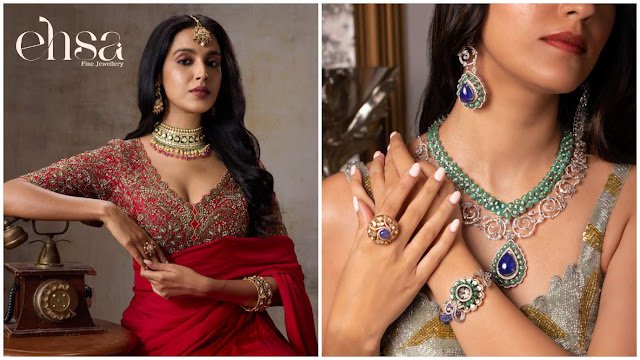
The Rise of Discreet Indian Luxury: How Ehsa Fine Jewellery Is Positioning Itself in the Global High-Jewellery Market

In the global luxury ecosystem, visibility has
long been currency. Scale, recognisable branding, and international retail
footprints traditionally signal legitimacy. Yet, a quiet countercurrent is
gaining strength. Discretion is emerging as the new status symbol.
Mumbai-based Ehsa
Fine Jewellery enters
this landscape with a deliberate refusal to participate in conventional luxury
expansion. Founded by Aakash Mehta, the invite-only fine jewellery atelier is
positioning itself not as a retail brand, but as a private high-jewellery house
rooted in generational Indian craftsmanship.
From Scale to Scarcity
Global luxury has evolved dramatically over
the past decade. Large conglomerates have standardised craftsmanship,
globalised distribution, and accelerated production timelines to meet demand.
While this model has expanded accessibility, it has also created a saturation
of visibility.
Ehsa’s strategy moves in the opposite
direction.
Operating through private referrals and
curated introductions, the brand produces limited commissioned pieces rather
than seasonal collections. There is no public pricing, no mass marketing, and
no overt retail presence. This scarcity model mirrors the private-atelier
approach historically associated with European high jewellery houses, but
contextualised within Indian artisanal traditions.
For Mehta, the philosophy is simple: “If a
piece commands significance, it must carry individuality. It should never feel
replaceable.”
Reclaiming Indian Craft as Global Luxury
India has long been central to the global
jewellery supply chain, from diamond cutting to gold craftsmanship. Yet Indian
artistry has often been positioned as manufacturing strength rather than brand
equity.
Ehsa’s larger ambition is to recalibrate that
narrative.
By foregrounding generational techniques such
as Polki, Kundan, and intricate hand-setting within a restrained,
heirloom-driven framework, the brand seeks to elevate Indian craftsmanship from
production capability to cultural capital.
Rather than reinterpret tradition into
contemporary minimalism for Western markets, Ehsa retains the depth and
architectural richness of Indian jewellery, presenting it as timeless rather
than ethnic.
This is a subtle but strategic distinction. It
positions Indian design heritage not as occasion-wear, but as collectible high
jewellery.
The Invite-Only Advantage
Exclusivity has always been foundational to
high jewellery. However, in an era where luxury is amplified through social media,
discretion has become rare.
Ehsa’s invite-only model directly addresses
this shift. By limiting access and emphasising private consultations, the brand
aligns itself with ultra-high-net-worth clients who increasingly value privacy
over visibility.
The model also allows for greater design
autonomy. Without the pressure of seasonal launches or trend cycles, production
timelines are extended. Craftsmanship becomes the focal point rather than
market velocity.
In global terms, this aligns with a growing appetite
for slow luxury and bespoke acquisition among collectors who seek distinction
rather than recognisability.
Founder as Custodian
Aakash Mehta positions himself less as a
conventional entrepreneur and more as a custodian of lineage. His messaging
consistently centres artisanship over expansion.
“We are not building for volume,” he notes.
“We are building for inheritance.”
This framing is strategic. In the
high-jewellery segment, founder narrative often influences brand equity. By
emphasising generational craftsmanship and cultural preservation, Mehta
situates Ehsa within a heritage-led luxury narrative rather than a startup
growth story.
Global Relevance Without Global Noise
The question remains whether a brand rooted in
discretion can compete in a globalised luxury environment driven by scale.
The answer may lie in shifting definitions of
relevance.
For emerging luxury consumers in markets such
as the Middle East, Southeast Asia, and parts of Europe, there is increasing
interest in culturally rooted high jewellery that carries authenticity. Indian
craftsmanship, when positioned at a premium tier rather than a celebratory
niche, holds significant potential.
Ehsa’s long-term opportunity may not be retail
expansion but international private showcases, trunk exhibitions, and
cross-border collector relationships. A controlled global presence, rather than
rapid globalisation.
A Quiet Repositioning of Indian Luxury
What distinguishes Ehsa is not merely its
craftsmanship but its strategic restraint.
At a time when luxury brands compete for
digital dominance, Ehsa is building a business model around absence. Limited
access. Limited production. Limited visibility.
If successful, it could signal a broader shift
in how Indian fine jewellery is perceived globally, not as ornate tradition,
but as collectible, heirloom-grade high jewellery with equal standing in the
international luxury conversation.
In redefining scale as scarcity and trend as
timelessness, Ehsa Fine Jewellery is not attempting to outpace the global
luxury industry.
It is attempting to outlast it.
Explore Ehsa Fine Jewellery on Instagram: https://www.instagram.com/ehsafinejewellery

Related Posts

CREDAI Surat Women’s Wing Strengthens Community Initiatives and Women’s Leadership in Real Estate
Chinmaya Vishwa Vidyapeeth launches School of Kalayoga – a music school in Baner, Pune