The Investor Mindset: Strategy, Service, and Scale | Ft. Rohan Sheth on Brand Ki Baat- Mumbai Edition

NewsReach
brings you unfiltered stories from professionals shaping the world of branding
on Brand Ki Baat.
The
success of commercial buildings is rarely accidental. Behind every thriving
commercial property lies a complex ecosystem of investors, tenants, developers,
and advisors working together to unlock value. In a city like Mumbai where real
estate presents both opportunity and challenge, success is determined not just
by location or capital, but by the ability to understand problems and solve
them effectively.
The
commercial real estate landscape demands strategy, trust, and long-term
thinking. Identifying the right tenant and ensuring smooth operations are
crucial for protecting and enhancing investor value.
Welcome
to Crafting Bharat: Brand Ki Baat – Mumbai Edition, a podcast where we
talk about brands, businesses and the people who build them from the inside
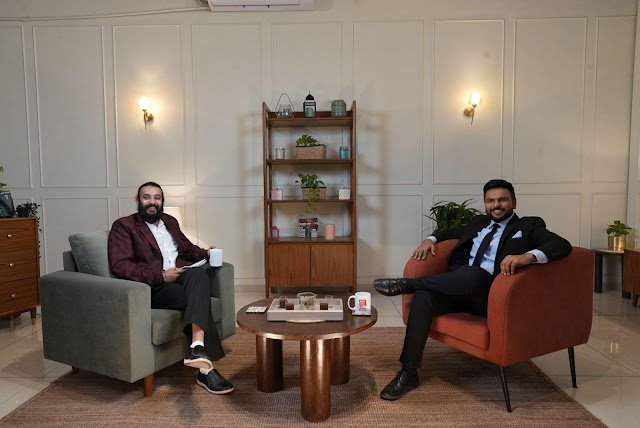
out. In this engaging episode, host Kartik Chawla sits down with Rohan
Sheth, Founder at Real Estate Advisory Firm Volney; for a conversation on
building an investor focused model in commercial real estate, solving landlord
challenges, and the evolving priorities of corporates choosing office spaces.
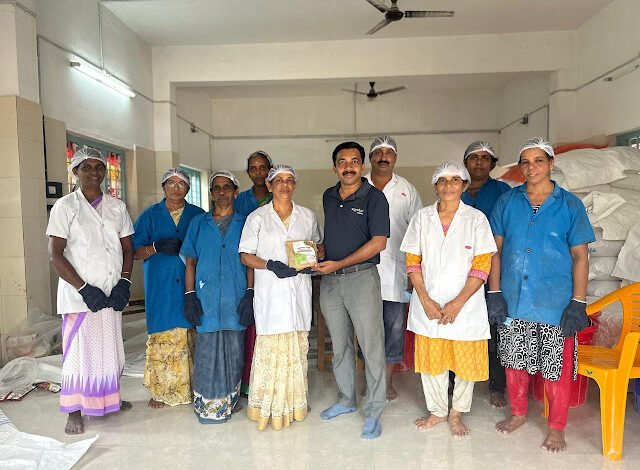
This series is proudly brought to you by NewsReach, India’s
leading PR-tech platform, with Production Partner HT Smartcast; Gifting Partner
Nanaji Natural and Beauty Partner Lakme Academy. Tune in for stories, insights,
and inspiration!
Episode Link: https://youtu.be/betLDx5M-Pc?si=jHLTfRXydOmjA3eW
Edited Excerpts
How
did you come up with Volney and develop an investor-oriented real estate model?
Rohan
Sheth: I had worked with developers and real estate
companies for nearly a decade and a half, so I was already familiar with the
ecosystem. However, things changed when I faced a personal challenge.
I
owned a small office space at the Trade Center, and it took me almost six to
eight months to lease it out. That’s when I realized that if someone from the
industry like me could take this long, it must be even harder for investors who
do not fully understand how the real estate ecosystem works.
That
realization led to the idea of creating an investor network model. Instead of
approaching the market with just one small office, we decided to approach it
collectively. I told other investors that instead of each of us offering a
1,000-square-foot office individually, we could combine our inventory and
represent nearly half a million square feet together. Once you bring scale, the
market begins to respond differently.
That
strategy gradually evolved into Volney, which today manages nearly 2.7
million square feet of commercial real estate across multiple projects in
Mumbai.
What
differentiates Volney in a highly competitive, brokerage-driven market?
Rohan
Sheth: There are already several large international
commercial real estate brokerage firms in the market, along with thousands of
smaller brokers. Instead of competing directly with them, we decided to find a
gap in the ecosystem.
Major
IPC companies like JLL, CBRE, Knight Frank, and Colliers are well
established, and there are countless local brokers as well. We identified a
niche in between and positioned ourselves as an investor network model.
We
represent landlords and investors while also collaborating with both
international and domestic brokers. More importantly, we take responsibility
for managing the entire leasing process.
In
many ways, we act as wealth managers for real estate assets. Our team is
present within the building and oversees everything from tenant identification
to maintenance and tenant requests. This allows landlords to sit anywhere in
the world and remain confident that their asset is being professionally
managed.
What
factors do multinational companies consider today when selecting office spaces?
Rohan
Sheth: Employee convenience has become one of the
most important priorities. Companies prefer office spaces that are well
connected through transportation and located within strong urban ecosystems.
Accessibility
plays a key role. Corporates evaluate whether the office is close to railway
stations, metro stations, or major roads. Along with connectivity, they also
assess the surrounding infrastructure and safety levels.
We
often receive extensive EHS (Environment, Health, and Safety) checklists
focused on employee well-being. Buildings must comply with fire safety
standards, emergency protocols, and even staff training requirements.
Workplace
design has also become a major factor. Offices are no longer viewed merely as
places to work. Companies want breakout areas, large cafeterias, natural
lighting, and spaces where employees genuinely enjoy spending time.
Since
employees spend nearly a third of their day at the workplace, organizations are
increasingly investing in environments that enhance both productivity and
well-being.
What
is Volney’s long-term vision?
Rohan
Sheth: Over the past five years, Volney has built a
strong portfolio and network within Mumbai’s commercial real estate ecosystem.
The next phase is focused on scaling and institutional expansion.
Today
we manage approximately 2.7 million square feet of commercial portfolio.
Over the next four to five years, we aim to grow this to nearly five million
square feet.
Alongside
expanding the portfolio, we are also working on strengthening our internal
capabilities and expanding our network of investors. In the long term, we
aspire to build a highly scalable business and eventually take the company
public.
Commercial
real estate is a business that, on the face of it, is all about deal-making;
however, as the conversation above shows, the true key to success lies in
problem-solving for investors, tenants, and businesses alike. From the
importance of networking for investors to the value of a service-driven
experience for property management, the approach outlined above is a reflection
of the way the industry is slowly moving beyond the traditional brokerage-based
business model.
As
the urban environment continues to evolve and corporate needs change, the
future of commercial real estate will be driven by those who are able to
balance strategic and operational excellence. The conversations above are a
glimpse of the ideas and decisions that are shaping the industry. Stay tuned
for more such insights.
Brought to you by NewsReach–India’s
leading PR-tech platform, with our production partner, HT Smartcast.

Related Posts
ABB invests USD 75 million in India to expand manufacturing and R&D for critical segments
Mumbai to Nashik: CSRBOX and The Godavari Initiative Conclude High-Level Conclave to Catalyse Water Resilience and Sustainable Investment